 Looking Ahead
Predict in parallel. Each future offset has a separate predictor conditioned directly on the same source representation. The branches do not exchange hidden states, preventing visual cues from noisy targets at one offset from reaching predictors at other offsets. This reduces visual shortcuts and information leakage.
01 / THE IDEA
To generate the next moment, learn to see beyond it.
Extending a video does not necessarily mean learning how a scene evolves. Videos contain strong temporal redundancy: neighboring chunks often share similar appearance and motion. Under teacher forcing, a model can exploit this local continuity in the ground-truth history to denoise the current chunk. This creates a shortcut with limited pressure to learn the underlying scene dynamics.
A natural way to move beyond this shortcut is to look farther into the future. As prediction targets move farther from the observed history, local continuity provides less direct support. Predicting these future chunks without the intervening ground-truth context places greater pressure on the model to capture temporal progression. The auxiliary task uses future video chunks as generative targets in latent space, without an additional semantic teacher.
02 / FUTURE CHUNK PREDICTION
Training-time supervisionPredicting future chunks. Learning visual evolution.
FCP adds parallel future predictors to an autoregressive video generator. They use intermediate backbone features to predict future chunks at different temporal offsets, without observing the intervening chunks.
METHOD DETAILS
Single-chunk conditioning. Auxiliary predictors are conditioned only on the hidden states of the source chunk, rather than the full history of hidden states. This promotes compact predictive representations while reducing auxiliary prediction costs.
Dual-source supervision. Clean latent processing encodes historical context for subsequent generation, while noisy latent processing supports current-chunk synthesis through denoising. Both roles are essential to autoregressive generation, so we apply future-prediction supervision to both types of representations.
Training-only modules. Future-prediction losses backpropagate through source representations to supervise the generator backbone. At inference, all FCP-specific modules are removed, preserving the teacher-forcing baseline’s autoregressive rollout with no additional overhead.
Scroll horizontally to explore the diagram · view the full-size figure to zoom

03 / QUANTITATIVE RESULTS
Better physical plausibility.
On Wan2.2-TI2V-5B, we compare teacher forcing and FCP with matched training data and experimental settings. Future-chunk supervision improves physical plausibility under both image and video conditioning.
Image-to-video
+11.2%+3.4 IQConditioned on an initial image.
| Training method | IQ ↑ | SP ↑ | ST ↑ | WS ↑ |
|---|---|---|---|---|
| Teacher forcing | 30.4 | 34.8 | 32.8 | 24.0 |
| + FCP | 33.8 | 36.8 | 41.1 | 25.2 |
Video-to-video
+9.4%+3.8 IQConditioned on a preceding video clip.
| Training method | IQ ↑ | SP ↑ | ST ↑ | WS ↑ |
|---|---|---|---|---|
| Teacher forcing | 40.6 | 48.5 | 40.8 | 37.8 |
| + FCP | 44.4 | 51.1 | 47.2 | 40.7 |
Controlled comparison from Table 2.
Efficient training.
FCP achieves higher Physics-IQ scores than teacher forcing at comparable training compute or matched data exposure.
These gains are not simply due to additional computation and suggest the potential for efficient scaling of autoregressive video training.
57.9%less compute
63.4%less data
At IQ 26.978, relative to the TF fit.
Teacher forcing+ FCPFit

Across physics-related benchmarks.
FCP delivers consistent gains across WorldModelBench, PAI-Bench-G, and PhyGround, extending the improvements beyond Physics-IQ. All comparisons use Wan2.2-TI2V-5B with matched training settings.
Teacher forcing+ FCP
WorldModelBench
Total ↑
7.22→7.64
View all metrics
| Metric | Teacher forcing | + FCP |
|---|---|---|
| Instruction | 1.77 | 1.81 |
| Physical Laws | 4.28 | 4.47 |
| Common Sense | 1.17 | 1.36 |
| Total | 7.22 | 7.64 |
PAI-Bench-G
Domain Score ↑
81.13→82.38
View all metrics
| Metric | Teacher forcing | + FCP |
|---|---|---|
| AV | 63.54 | 64.81 |
| Common Sense | 90.90 | 92.10 |
| Human | 81.62 | 82.46 |
| Industry | 85.65 | 87.24 |
| Physics | 90.09 | 90.29 |
| Robot | 70.56 | 72.95 |
| Domain Score | 81.13 | 82.38 |
PhyGround
Physics ↑
2.75→2.80
View all metrics
| Metric | Teacher forcing | + FCP |
|---|---|---|
| General | 2.63 | 2.66 |
| Physics | 2.75 | 2.80 |
Official evaluation code and metrics · mean over seeds 42–45 · 5-second videos at 24 FPS.
04 / VIDEO SHOWCASE
Same scene. Different training. · V2V continuation · 1s input → 4s generatedLet physics unfold.
Follow the wave of falling dominoes as it travels across the pattern.
CASE 01 / 16Teacher forcing · TFOurs · FCP
0.0 / 5.0s
Video could not be loaded. Select another example or reload the page.
05 / INSIDE THE REPRESENTATIONS
What kind of representation space does the model learn?
Compare feature similarity for the selected query within a frame (Spatial) or across frames (SpatioTemporal). Spatial compares TF and FCP; SpatioTemporal shows FCP across time. Each query uses a shared color scale. These visualizations suggest that FCP learns more selective, structured, and semantically meaningful representations.
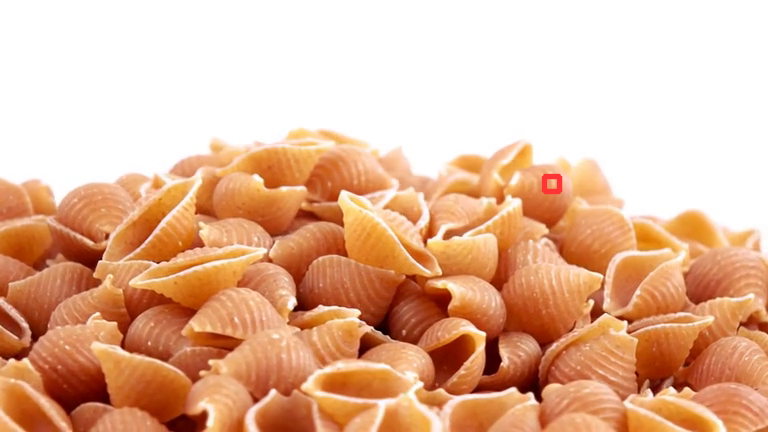
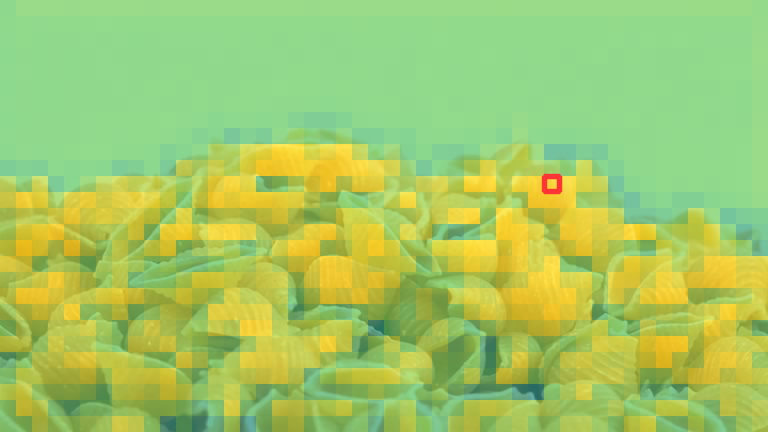
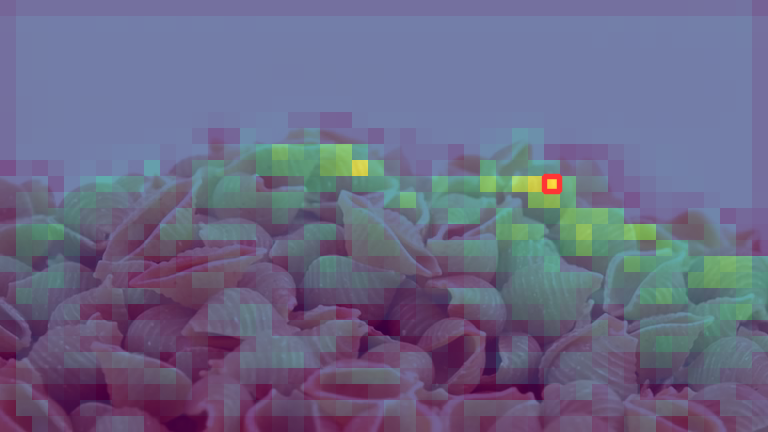
Cosine similarity
0.18230.7623
Frame 11
Frame 23
Frame 47
Frame 83 · query
Video frame
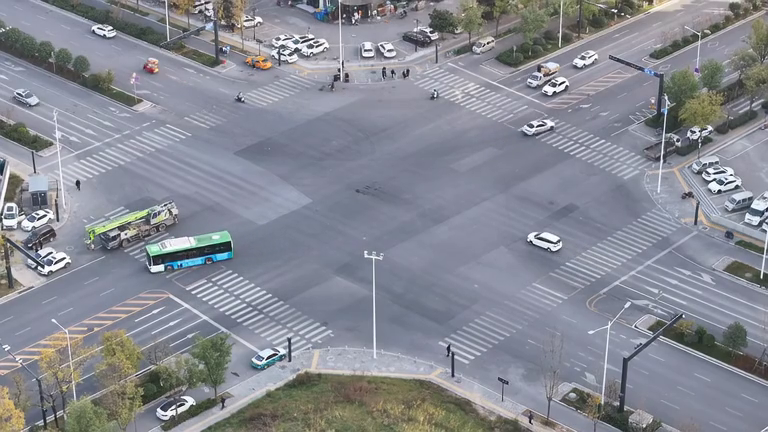
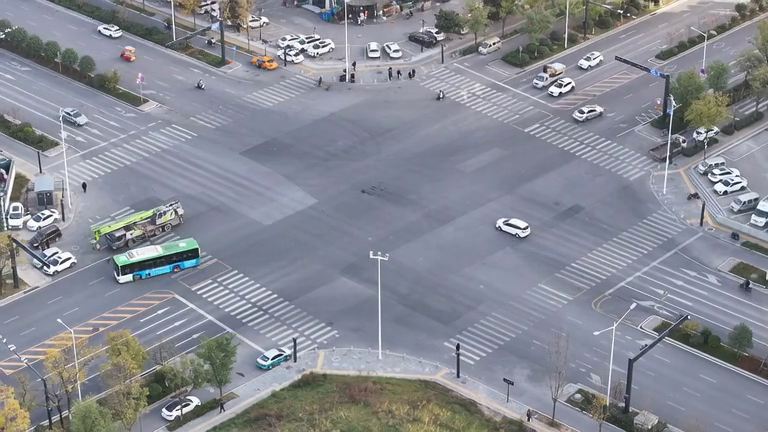
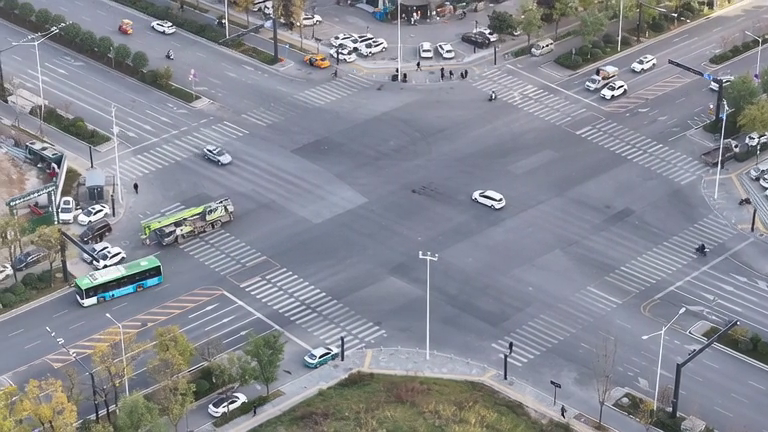
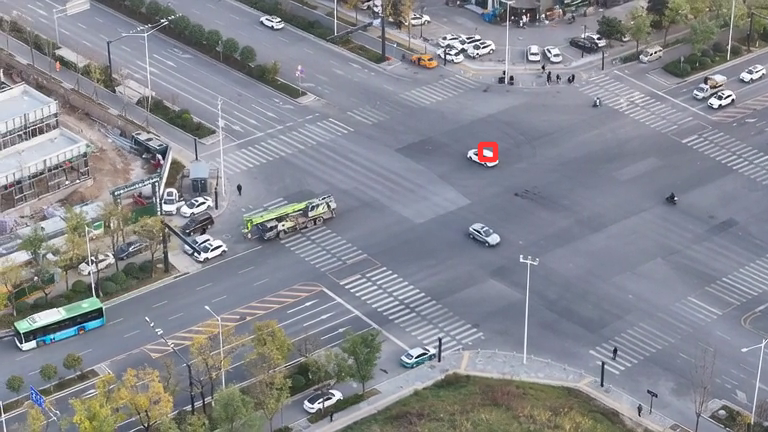
+ FCP
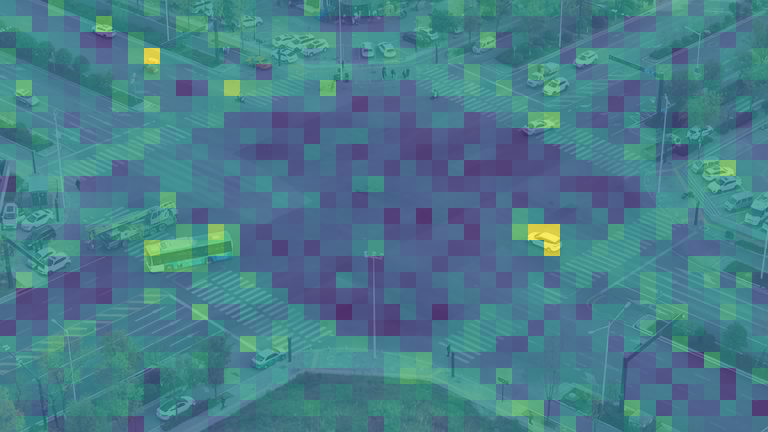
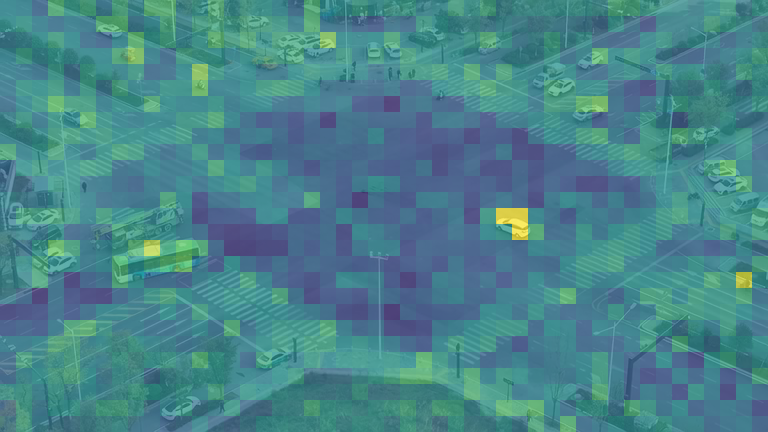
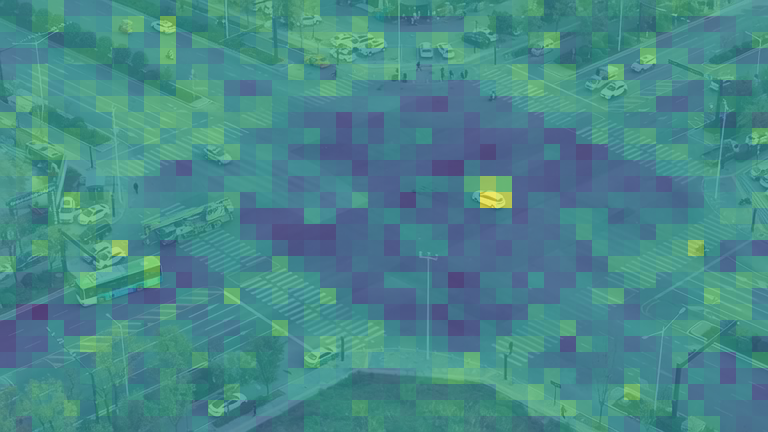
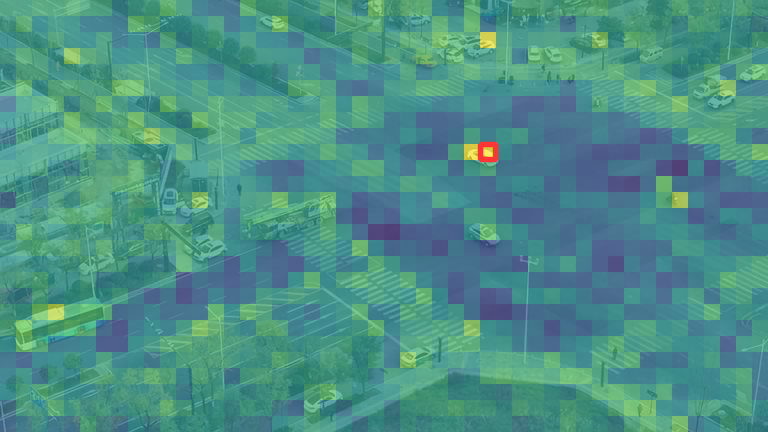
Cosine similarity
0.33850.7066
Fixed query · clean input frames · shared color scale across time within each query · click any image to enlarge.
06 / EXPLORE THE PROJECT
Looking ahead, together.
We will continue evaluating FCP across a broader range of benchmarks to assess whether models learn to capture more diverse forms of visual evolution, while exploring new applications. We welcome your ideas and perspectives. Please feel free to get in touch.